Many parents worry that speaking Hindi or Telugu at home will hold a child back in English, or that mixing languages will confuse them. The evidence points the other way: children can tell languages apart from an early age, and a strong home language tends to make it easier to learn others, including English.
No. Speaking Hindi or Telugu at home does not slow down English. Keep using the home language, and give your child regular chances to hear and use English too. The two support each other rather than compete.
Will my child get confused hearing two or three languages?
No. Around half the world’s population speaks more than one language, and children who grow up with two or more languages can tell them apart early on. They might do something called code-switching, where they swap a word from one language into a sentence in another. That is a normal part of being bilingual, not a sign of confusion, and bilingual adults do it too.
Will my child do worse at school if we speak Hindi or Telugu at home?
No. Research summarised by Speech and Language UK, a children’s speech and language charity, finds that many bilingual children do as well as, or better than, children who hear only one language. A strong foundation in the home language tends to help a child learn other languages, including English, rather than get in the way.
A 2021 study of English-dominant, Spanish-speaking households in the United States, led by Erika Hoff at Florida Atlantic University and published in the journal Child Development, found that children who heard the most Spanish at home were not behind in English. Children exposed to English from an early age tended to become English-dominant by around age five, without their Spanish holding that back.
So what actually helps a child learn English faster?
The amount of English a child hears and gets to use is what moves English along, not whether the home language is also spoken. Switching the whole house to English is not necessary, and is not what the evidence recommends. What helps is making sure a child gets real chances to hear and speak English somewhere in their week, alongside a home language that keeps being used normally.
What if my child mixes Hindi and English in one sentence?
That is code-switching, and it is expected, not a mistake to correct. A child might say “Mujhe ek apple chahiye” or reach for an English word mid-sentence because it comes to mind faster at that moment. Over time, as a child’s vocabulary grows in both languages, this naturally settles. You can simply continue the conversation, and model the fuller sentence in whichever language fits, without making the mixing itself an issue.
A simple way to use both languages together
You don’t need to separate the languages into strict blocks. A routine that works well in Hindi- or Telugu-speaking homes: say the word in English, then in the home language, then use it in a short English sentence. “Apple. सेब. I want an apple.” The 100 easy English words list is a good place to start this with, and colours, numbers and shapes works well too.
Why the home language is worth keeping
Beyond helping English along, a child’s home language connects them to family, culture and identity in ways English alone cannot. Grandparents, extended family and community life often run in Hindi or Telugu, and a child who speaks it comfortably stays connected to all of that. None of this is in competition with learning English well.
When should I talk to someone about my child’s speech or language?
Bilingualism does not cause speech or language difficulties. Some bilingual children do have genuine speech or language difficulties, just as some children who speak only one language do, and in that case the difficulty usually shows up in both languages, not just English. If you are concerned about how your child communicates in Hindi or Telugu as well as English, that is worth discussing with a qualified teacher or speech and language professional who knows your child, rather than something to diagnose from an article.
Keep building on both languages
If your child is working on English speaking confidence generally, help your child speak English at home has everyday routines to build on. If they understand more English than they say, this is a common, normal stage, and the same ideas apply whether your home language is Hindi, Telugu or both.
Frequently asked questions
Does speaking Hindi or Telugu at home slow down my child's English?
No. Research summarised by Speech and Language UK and a 2021 study from Florida Atlantic University both find that a home language does not hold back English. Children who heard the most Spanish at home in that study were not behind in English.
Will mixing Hindi and English in one sentence confuse my child?
No. This is called code-switching, and it is a normal part of growing up bilingual. Children can tell languages apart from an early age, and even bilingual adults code-switch.
Should we switch to speaking only English at home?
No. Evidence does not support this. Keep using Hindi or Telugu at home, since a strong home language tends to make learning other languages, including English, easier, and switch is not necessary for a child to learn English well.
Does bilingualism cause speech or language problems?
No, bilingualism does not cause speech or language difficulties. Some bilingual children do have genuine difficulties, the same as some children who speak only one language, and this usually shows up in both languages, not only English.
How can I support both languages at home?
Keep talking, reading and telling stories in Hindi or Telugu, the language you know best, and add a few minutes of English a day through objects, books, conversation or videos.
Sources & further reading
- Speech and Language UK: Children learning more than one language
- HealthDay: Spanish Spoken at Home? It Won’t Slow Youngsters Learning English (reporting a 2021 Child Development study led by Erika Hoff, Florida Atlantic University)
Flucie’s article is original educational content. The sources above informed the practical guidance; they are not reproduced here.
Keep reading
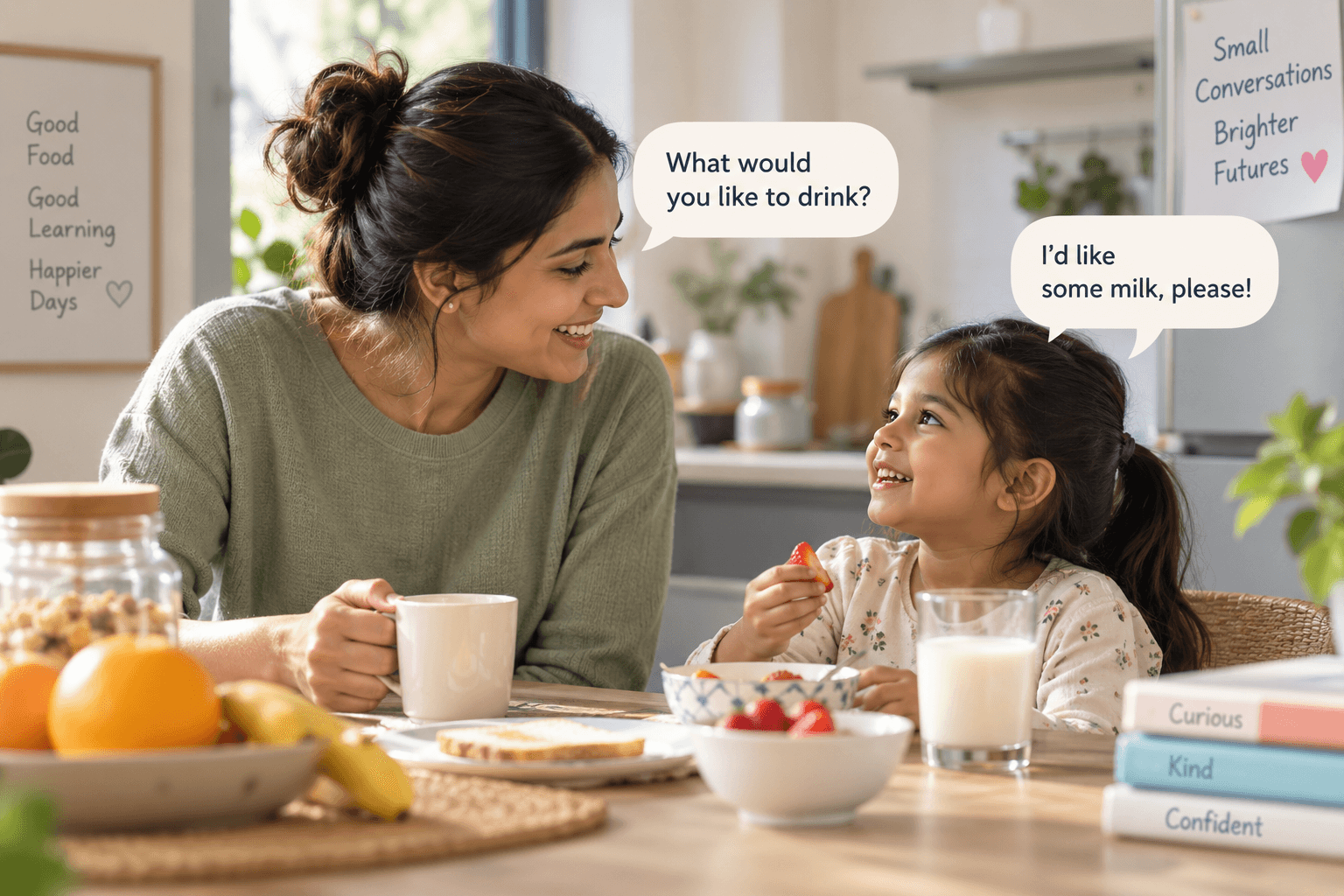 English Speaking
How to Help Your Child Speak English at Home
Simple ways to turn everyday moments into meaningful English conversations.
 English Speaking
My child understands English but doesn't speak. What can I do?
If your child follows English but rarely answers in it, there are simple ways to make speaking feel easier.
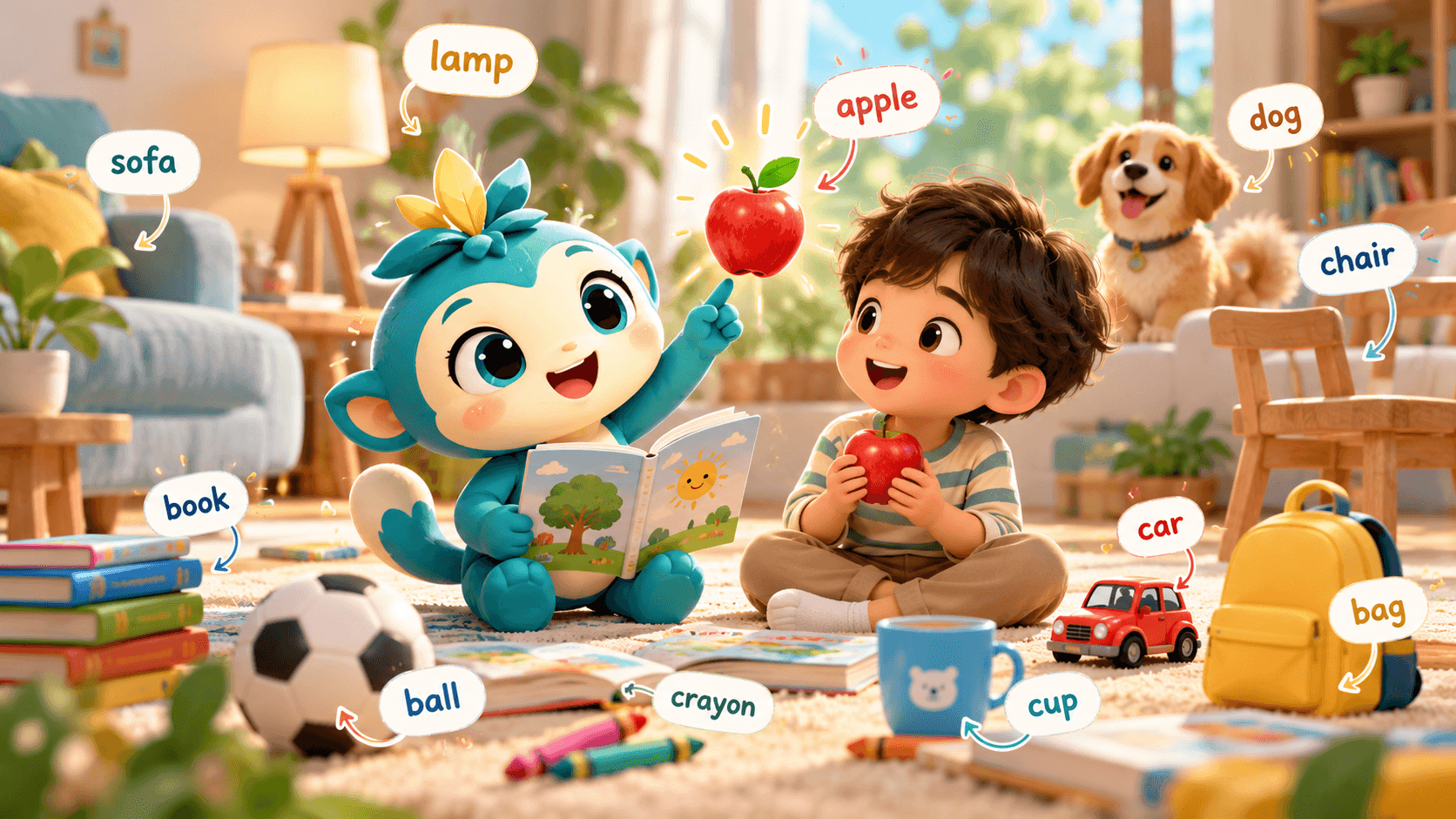 Vocabulary
100 Easy English Words for Kids to Learn at Home
Simple everyday vocabulary children can see, hear, say and use, with a short example sentence for every word.
Written by the Flucie team. See how we make our content or send a correction to hello@flucie.com.
Build on both languages, together.
Flucie helps children learn English through stories, reading, speaking and real-life practice, with Hindi and Telugu support.
Explore Flucie Create