
Understanding a language and producing it are not the same task. A child may know what you mean long before they feel ready to answer in English. British Council guidance notes that children can understand more English than they can say, while Cambridge English recommends giving children relaxed opportunities to use language they already know.
Give your child small, useful reasons to speak. Start with familiar things, accept short answers, model a slightly fuller sentence, and give them time to respond. Then use the same words again in another situation.
Why does this happen?
Speaking asks a child to do several things at once: understand the question, find the right words, build a response and say it aloud. If English is mainly something they hear at school or in books, they may have had fewer chances to produce it.
That doesn’t mean they are not learning. It can simply mean that their understanding is ahead of their spoken English.
The useful question is not, “Why won’t my child speak?” It is, “Where can I give them a reason to use a little English today?”
Start with what they already understand
Choose things your child knows well: breakfast, toys, clothes, school bags, favourite foods or a walk outside. Familiar situations can make it easier to focus on the language itself.
1. Begin with one small answer
You don’t need a full sentence every time. If you ask, “What colour is the cup?” and your child says “Blue,” that is a useful start.
You can naturally extend it: “Yes, it’s a blue cup.” The child hears a fuller version without being stopped to correct themselves.
2. Give them something to talk about
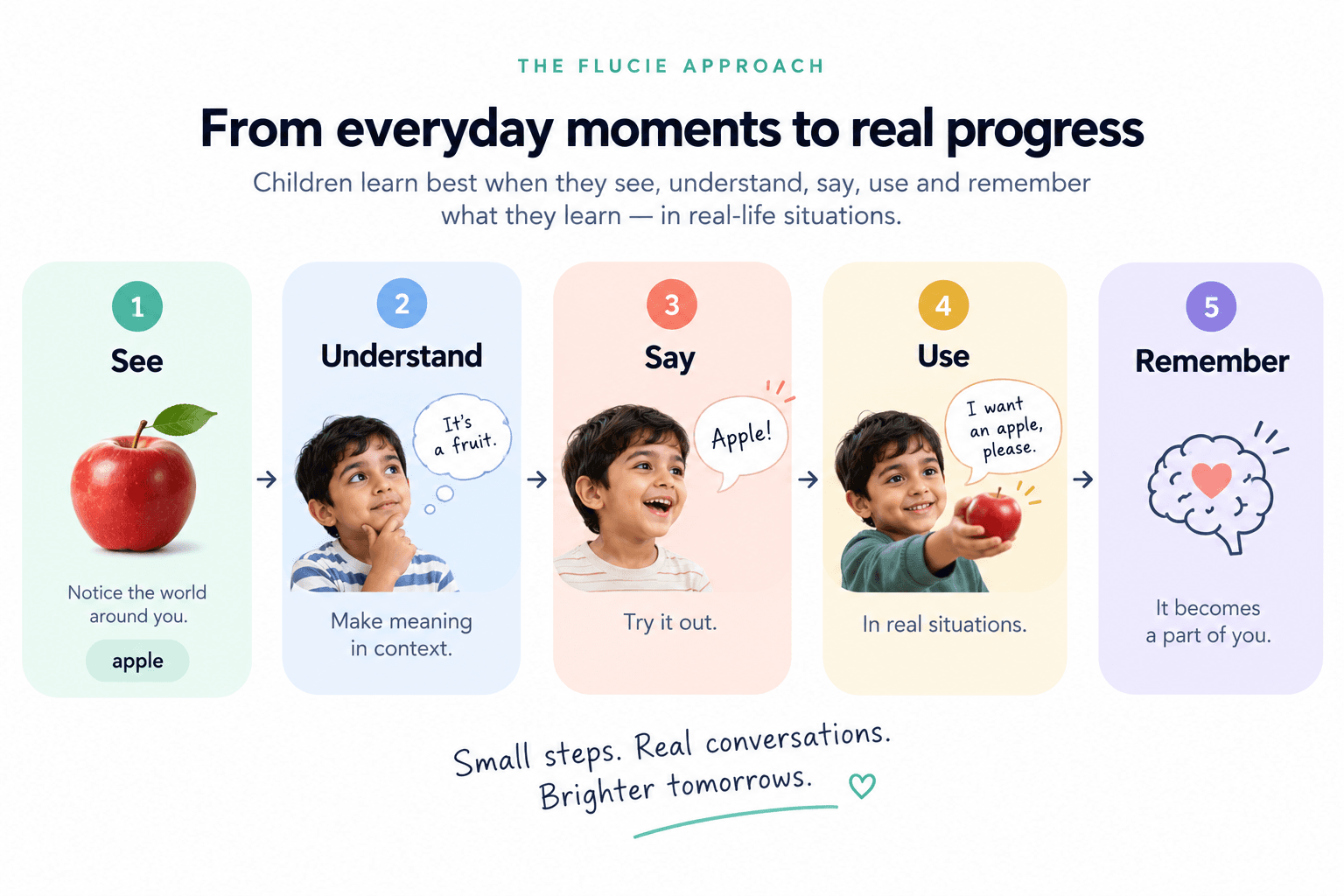
Questions are easier when the answer is right in front of them. Point to an object, look at a picture, open the fridge, pack a school bag or choose fruit at a shop.
“What is this?”
“Apple.”
“It’s a red apple.”
“I want an apple, please.”
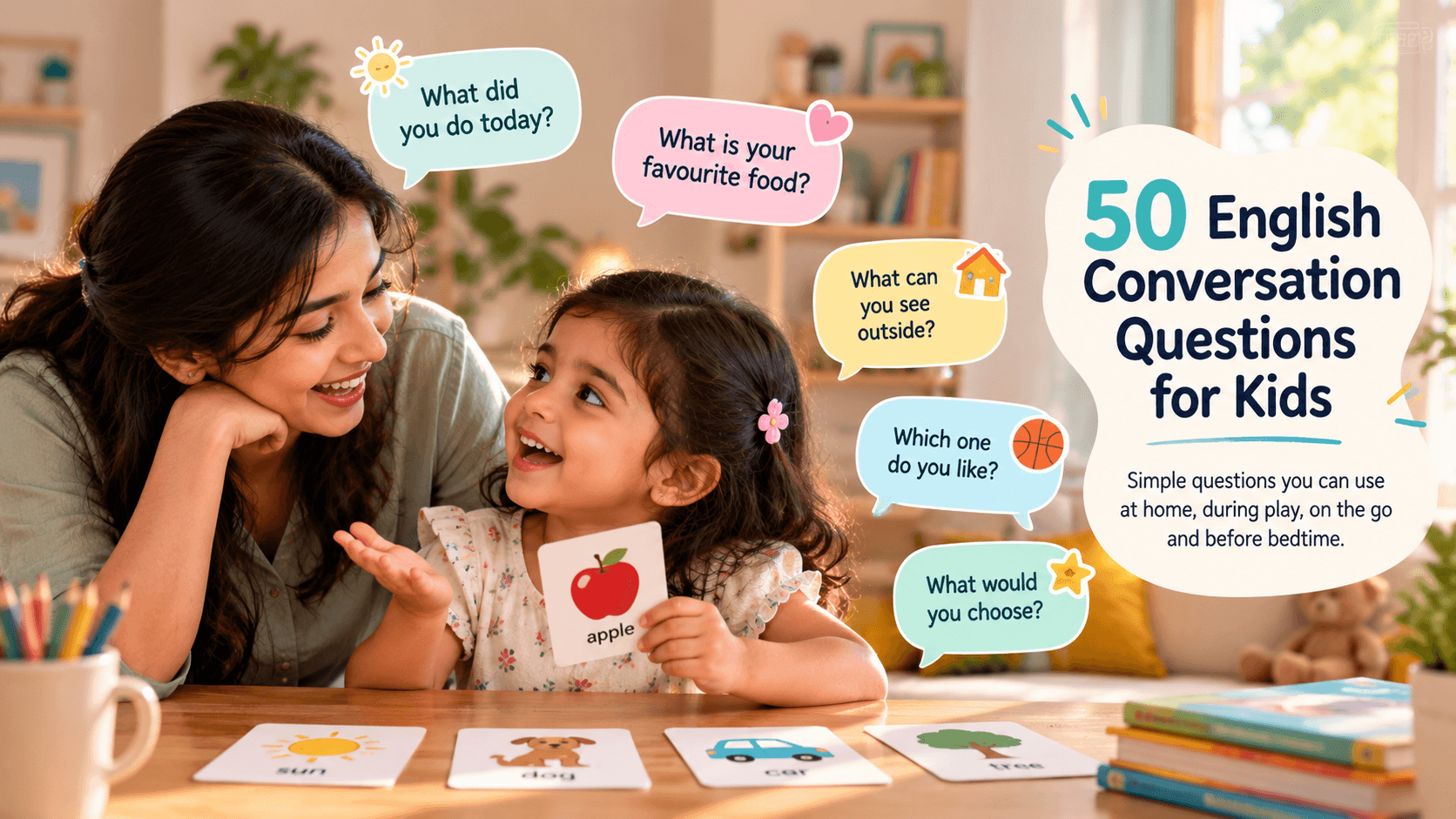
If you want more ready made prompts like this, 50 English conversation questions for kids has a full list organised by everyday moment.
3. Don’t turn every sentence into a correction
If your child is trying to communicate, let them finish. Cambridge English advises against interrupting to correct mistakes and suggests modelling the correct language after the child has finished.
4. Reuse the same useful phrases
Children don’t need hundreds of new phrases every day. A small set that appears repeatedly can become familiar enough to use without much effort.
“Here you are.”
“It’s ten.”
“I’d like some pasta, please.”
“Sure.”
5. Give them a little more time
A quick question followed by a quick second question can leave no space to think. British Council guidance recommends allowing longer pauses because children may need time to process what they hear before they are ready to reply.
Try asking once, then wait. If needed, give a clue rather than immediately giving the answer.
6. Bring English into things they already enjoy
Cooking, drawing, building, playing, reading or getting ready for school can all become short speaking opportunities. Cambridge English recommends regular, short practice and using a child’s interests to make practice more relevant.
You don’t need to announce a “lesson”. You can simply talk about what is happening. If you want a fuller daily routine to build on, see how to help your child speak English at home.
7. Let stories lead to conversation
After reading a picture book, don’t quiz your child on every page. Pick one picture and ask something easy: “What do you see?” “Where is the dog?” “What do you think happens next?”
Even finishing one familiar sentence or naming one object is useful practice. The goal is to make English part of the experience, not turn reading time into a test.
English is everywhere
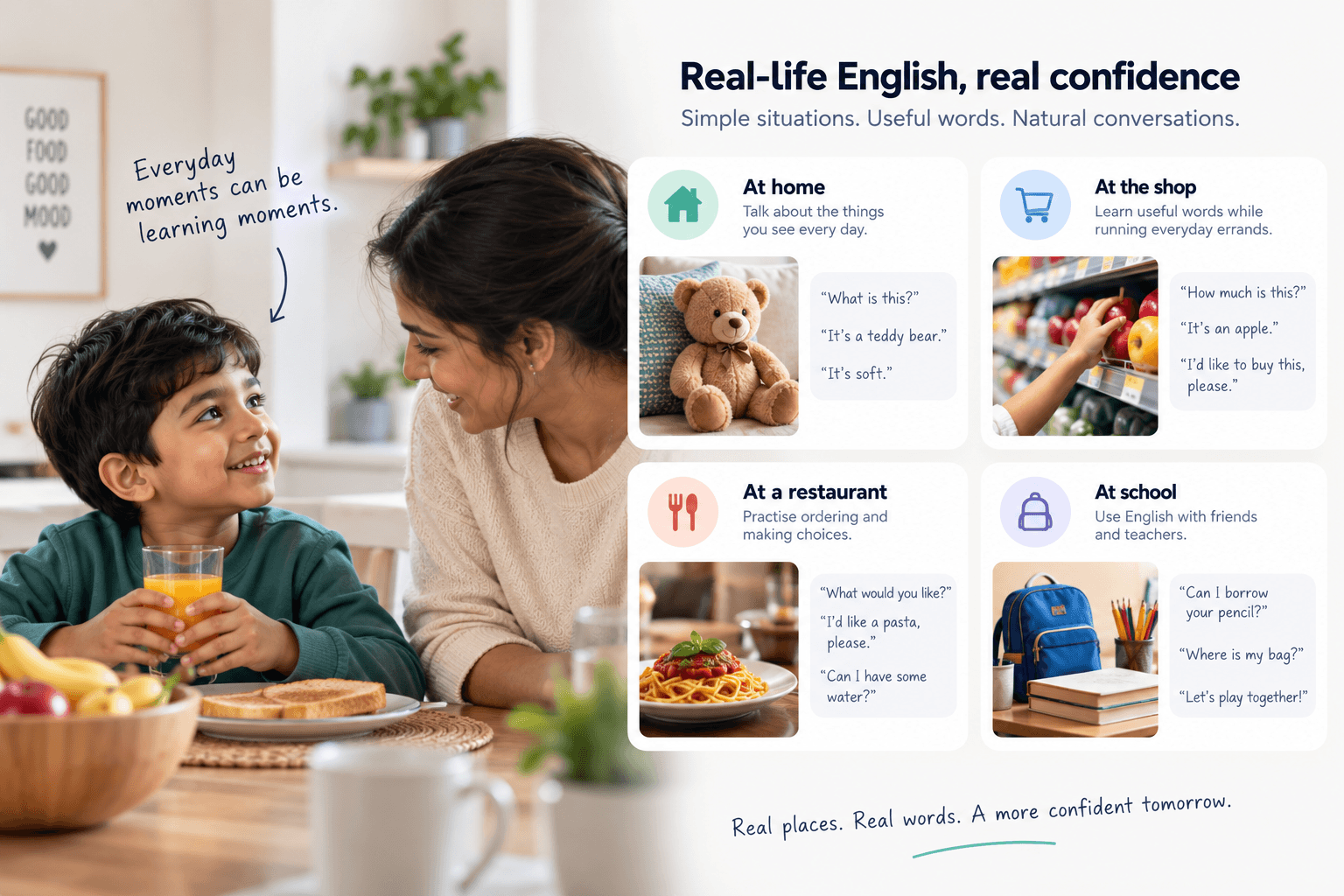
The most useful practice often happens where there is something to do. A trip to the shop gives you words such as “price”, “buy” and “apple”. A restaurant gives you “menu”, “order” and “please”. Getting ready for school gives you “bag”, “pencil” and “borrow”.
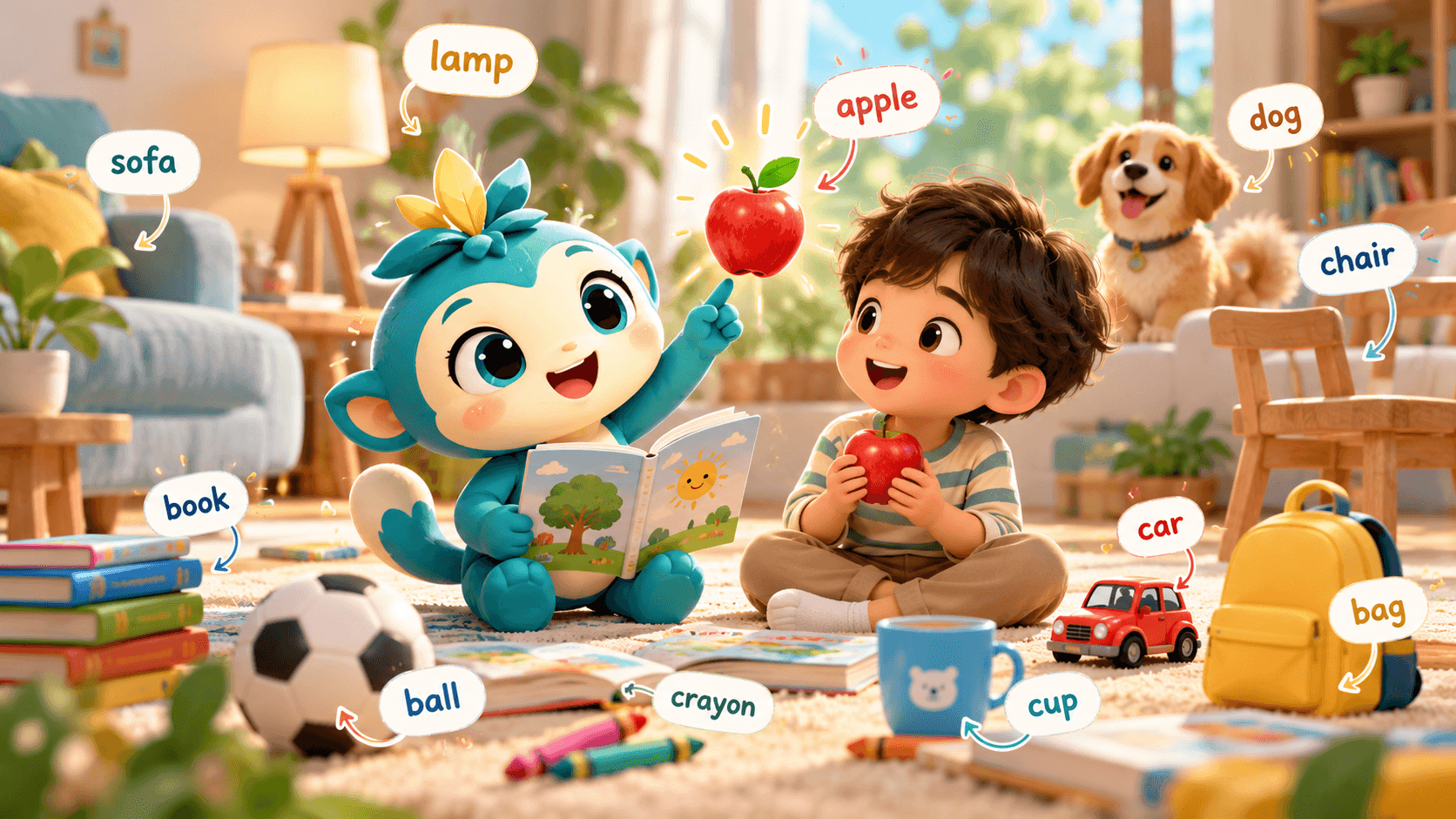
That connection between words and situations gives children a reason to use what they know. If you want a ready list to choose from, these 100 easy English words for kids are grouped by room and routine.
Try this tonight: 5 minutes, three things
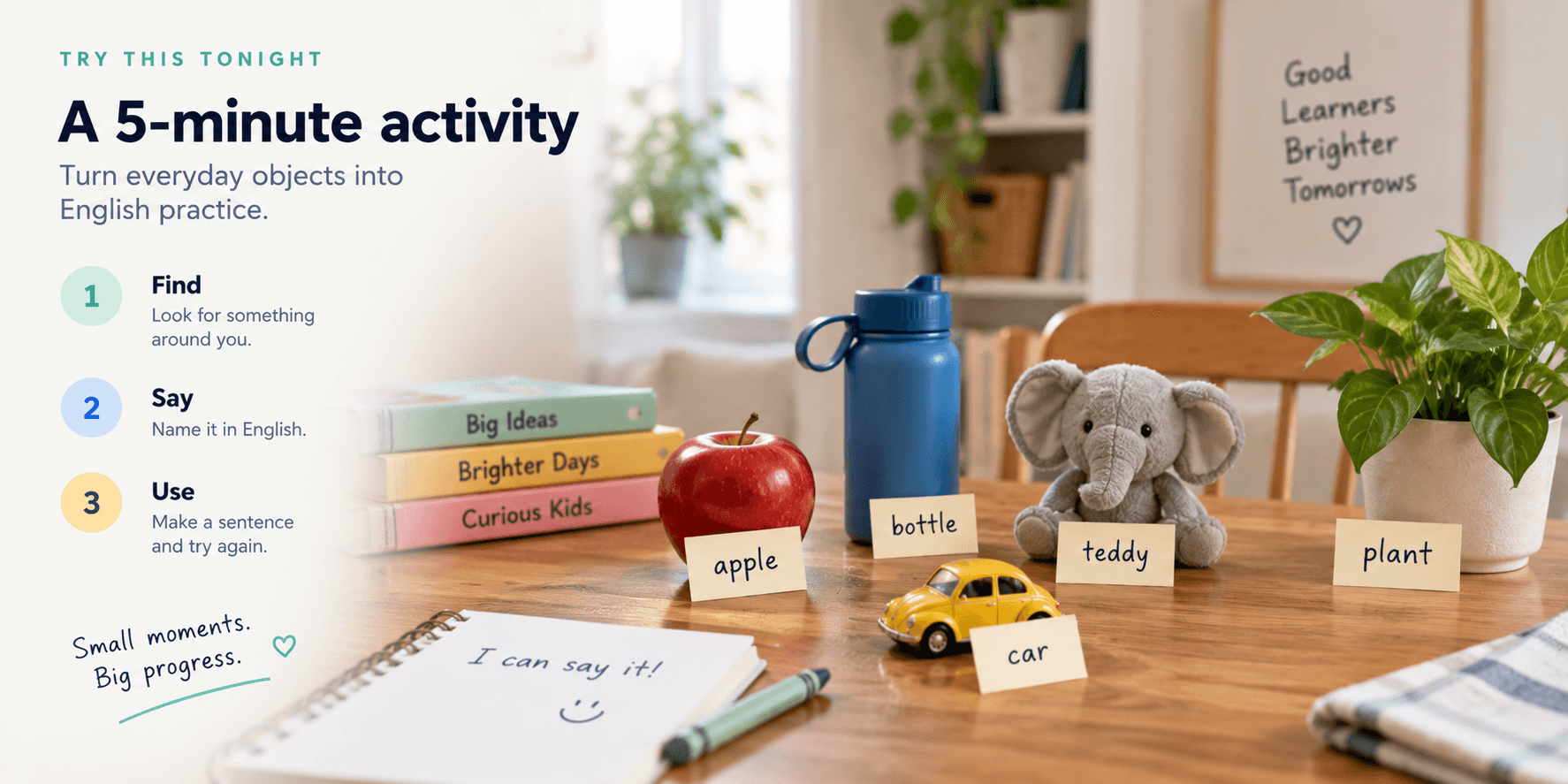
Choose three objects around your home. They could be an apple, a bottle and a toy car.
- Find: Ask your child to find something of a particular colour or shape.
- Say: Ask them to name it in English.
- Use: Ask for one simple sentence: “It’s a red apple.”
- Try again: Move to the next object. Keep the pace light.
If your child gives one word, start there. You can model the longer sentence without making the moment feel like a correction.
For a screen-based version of this same idea, Flucie Create turns colouring an apple into a few minutes of guided speaking practice.
What to avoid
Give them a chance to think before filling the silence.
Let them finish speaking before modelling a better version.
A one-word answer can be a perfectly good first step.
Use real objects, activities and conversations instead.
When should I expect progress?
There isn’t a single timetable that fits every child. What you can control is the number of useful opportunities they get to hear and use English. Short, regular practice is easier to fit into family life than occasional long sessions, and repetition gives children more chances to become comfortable with familiar language.
If you are concerned about your child’s overall communication or language development, not just their willingness to speak English, it is worth discussing that concern with a qualified teacher or health professional who knows your child.
Frequently asked questions
Why does my child understand English but not speak it?
Understanding can develop ahead of spoken production. A child may follow familiar English while still needing more opportunities, time and confidence to produce their own answers.
How can I encourage my child to speak English at home?
Use familiar routines and interests, ask simple questions, accept short answers, model useful phrases and give your child regular chances to use English without turning every moment into a lesson.
Should I correct every English mistake?
No. Cambridge English recommends not interrupting children to correct every mistake. Let them finish, then model the correct word or sentence when useful.
How long should English practice be?
Short sessions can work well, particularly for younger children. British Council and Cambridge English both recommend keeping activities manageable and regular rather than making every practice session long.
What if my child answers in our home language?
You can respond naturally with the English phrase you want them to hear and reuse. A home-language answer does not mean the child has failed; it can be a useful bridge to the English expression.
Sources & further reading
- Cambridge English: How to encourage your child to speak confidently in English
- British Council LearnEnglish Kids: Speaking English at home
- Cambridge English: How parents can support English language learning
Flucie’s article is original educational content. The sources above informed the practical guidance; they are not reproduced here.
Keep reading
 English Speaking
How to Help Your Child Speak English at Home
Simple ways to turn everyday moments into meaningful English conversations.
 English Speaking
50 English Conversation Questions for Kids
Fifty simple questions you can use at breakfast, during play or before bedtime to get your child talking in English.
 Vocabulary
100 Easy English Words for Kids to Learn at Home
Simple everyday vocabulary children can see, hear, say and use, with a short example sentence for every word.
Written by the Flucie team. See how we make our content or send a correction to hello@flucie.com.
Make everyday moments count.
Flucie is being built around stories, reading, speaking and real-life practice, so children can use English for something, not just answer a worksheet.
Explore Flucie