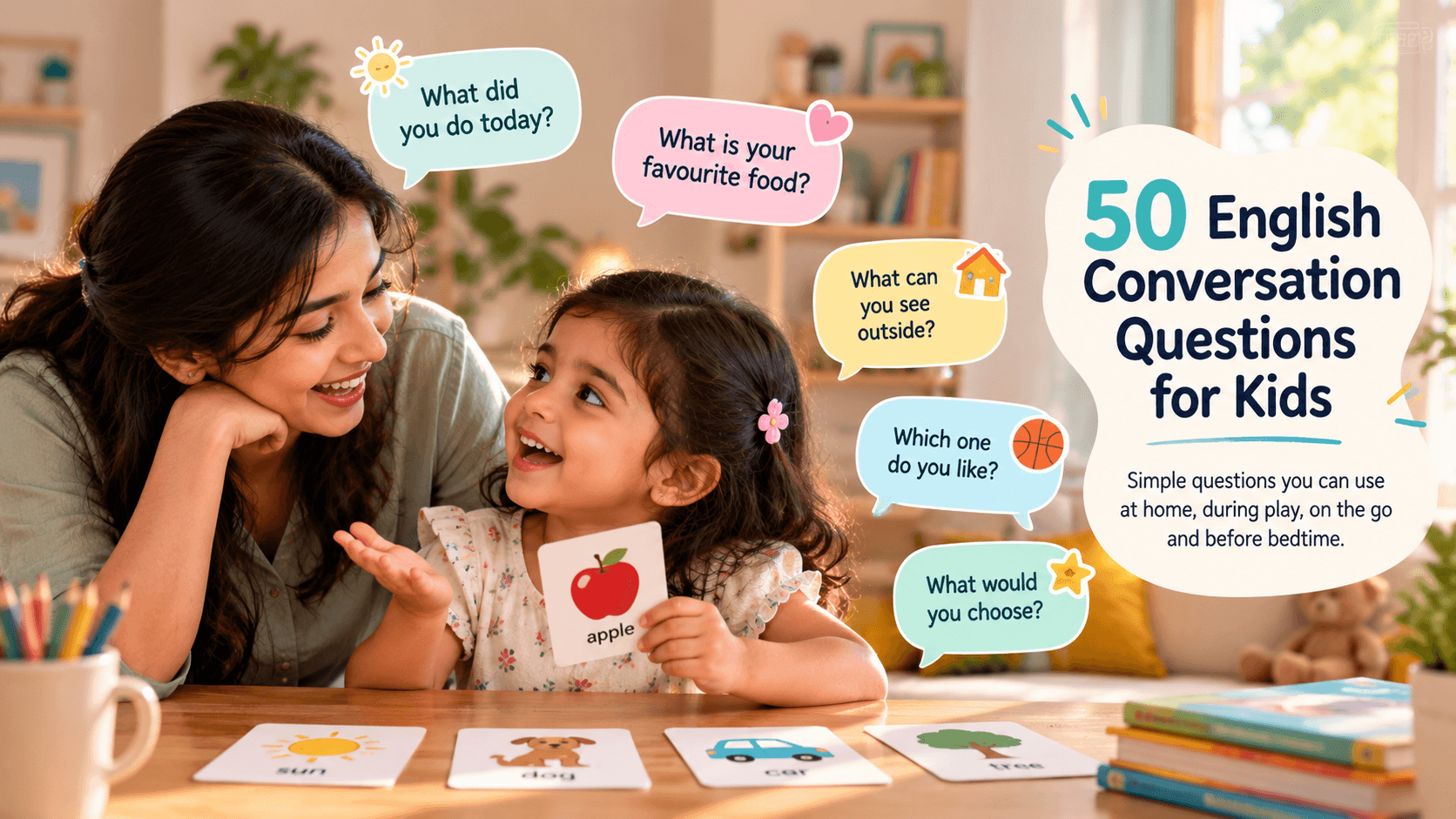
You do not need fifty questions in one sitting. A single question at the right moment, asked at breakfast, during play, on the way to school or before bedtime, is often enough to turn a quiet car ride or a slow morning into a few minutes of real English practice.
Pick one or two questions that fit what you are already doing. Let your child answer in a word, a phrase or a full sentence. The goal is a small, natural reason to use English, not a quiz.
1. Morning and getting ready
Easy questions for breakfast, getting dressed and starting the day.
What would you like to eat?
What would you like to drink?
What colour is your cup?
What do you want to wear today?
Where are your shoes?
What do you want to do today?
What can you see outside?
What can you hear?
What are you excited about?
What should we do first?
2. Around the house
Turn the things your child already sees into conversation starters.
What is this?
Where does it belong?
What colour is it?
Is it big or small?
What do we use it for?
Can you find something soft?
What is in the kitchen?
What is under the table?
Which room do you like?
What would you change?
3. Food and cooking
Use meals and cooking to practise choices, descriptions and simple sentences.
What fruit do you like?
Which one smells good?
What should we make?
What do we need?
Is it hot or cold?
What colour is it?
What does it taste like?
Which one would you choose?
What should we add?
Would you like some more?
4. Play and imagination
Open ended questions give children a reason to explain, imagine and keep talking.
If your toy could talk, what would it say?
Where would you take it?
What would you build?
What would happen next?
Who would you invite?
What colour would you choose?
Can you make a story about this?
What would you change?
What would happen if it could fly?
What would you call it?
5. Thinking questions
For children who are ready to move from simple answers into explaining an idea.
Which one doesn't belong?
What would happen if…?
Why do you think that happened?
What would you do?
Which would you choose?
Can you think of another way?
What might happen next?
How are these two things different?
What would happen if we didn't have it?
Can you explain your idea?
Make one question grow
If your child gives a short answer, you can build on it one small step at a time instead of moving straight to the next question.
What is it?
What colour is it?
Do you like it?
Why?
What would you do?
This same idea, asking one question and then building on the answer, is behind how we set up everyday speaking routines at home. If your child understands these questions but rarely answers out loud, that is a common stage, and this guide has more ways to help.
If your child needs the words before the questions, start with these 100 easy English words, then come back to this list.
For a version your child can try on their own, Flucie Create turns one of these conversation patterns, naming and describing something, into a short colouring and speaking activity.
Frequently asked questions
How many of these questions should I use each day?
Just one or two is enough. Pick a question that fits what you are already doing, such as breakfast or playtime, rather than working through the list in order.
What if my child only answers in one word?
That is a good start. You can repeat the answer back as a full sentence so your child hears the longer version, without asking them to repeat it themselves.
What age are these questions for?
Most of these questions work well for children aged four to nine. Younger children may answer in single words, while older children can usually explain their thinking in a full sentence.
Can I ask these questions in Hindi or Telugu first?
Yes. Asking the question in a familiar language first can make it easier for your child to understand, and you can then repeat it in English before they answer.
Do I need to use the questions in order?
No. Pick whichever section matches what you are doing right now, such as food and cooking at mealtimes or play and imagination during playtime.
Sources & further reading
- British Council LearnEnglish Kids: Speaking English at home
- Cambridge English: How to encourage your child to speak confidently in English
Flucie’s article is original educational content. The sources above informed the practical guidance; they are not reproduced here.
Keep reading
 English Speaking
My child understands English but doesn't speak. What can I do?
If your child follows English but rarely answers in it, there are simple ways to make speaking feel easier.
 English Speaking
How to Help Your Child Speak English at Home
Simple ways to turn everyday moments into meaningful English conversations.
 Vocabulary
100 Easy English Words for Kids to Learn at Home
Simple everyday vocabulary children can see, hear, say and use, with a short example sentence for every word.
Written by the Flucie team. See how we make our content or send a correction to hello@flucie.com.
Make everyday moments count.
Flucie is being built around stories, reading, speaking and real-life practice, so children can use English for something, not just answer a worksheet.
Explore Flucie