Most spelling mistakes come from a small number of causes, and the same words trip up learners and fluent writers alike. Here are 20 words that are often misspelt, the usual wrong version, and a short way to remember each one.
Learn these 20 words in groups of five, one group a day. For each word, look at it, say it in parts, cover it, write it from memory and check. Practise the words you actually get wrong, not a long generic list.
20 commonly misspelt words
| Often written | Correct | How to remember it |
|---|---|---|
| definately | definitely | The word “finite” sits in the middle: de-finite-ly. |
| recieve | receive | I before E, except after C. Receive comes after C, so it is E before I. |
| seperate | separate | There is “a rat” in sepaRATe. |
| necesary | necessary | One collar (c) and two sleeves (ss). |
| untill | until | Until has one l at the end. (Till has two.) |
| tommorow | tomorrow | One m, two r: to-mo-rrow. |
| alot | a lot | Two words, like “a bit” and “a few”. |
| accomodate | accommodate | Double c and double m: a room big enough for two guests. |
| occured | occurred | Double c and double r. The r doubles because the stress falls on the last part. |
| wierd | weird | Weird is weird: it breaks the I before E rule. |
| adress | address | Two d and two s. Think “add” plus “ress”. |
| embarass | embarrass | Two r and two s. Say it as “em-bar-rass”. |
| goverment | government | Govern + ment. Do not lose the n in the middle. |
| enviroment | environment | There is “iron” inside envIRONment. |
| Febuary | February | Say the first r: Feb-ru-ary. |
| libary | library | Say the first r: li-brar-y. Think of “book”, not “liberty”. |
| beleive | believe | There is a “lie” in beLIEve. |
| freind | friend | A friend is there to the end: fri-END. |
| sucess | success | Two c and two s: a double success. |
| begining | beginning | Double the n before -ing: begin-n-ing. |
Why these words go wrong
The mistakes fall into a few patterns, and spotting the pattern helps with other words too.
- Double letters. Necessary, accommodate, occurred, address, embarrass, success and beginning all hide a double letter. Writers often put one letter where there are two, or two where there is one (until has one l).
- I before E. Receive, believe, friend and weird all mix up the two letters. The rule helps for most words, but weird is a famous exception.
- Letters you do not say. February, library, government and environment have sounds that are easy to skip when speaking, so they are skipped when writing as well.
- Words that are really two words. A lot is two words. So are in fact and as well. Writing them as one word is a very common slip.
A five-minute way to practise
- Look at the word and notice the tricky part.
- Say it slowly in parts, even the sounds you usually skip.
- Cover it.
- Write it from memory.
- Check against the correct spelling, and fix it if needed.
Repeat on three different days. Spreading the practice out helps more than doing it all at once.
Find your own mistakes
The most useful words to practise are the ones you get wrong in your own writing. Paste an email or a paragraph into the Flucie spelling checker. It underlines doubtful words and suggests the correct spelling, and it works in British or American spelling. It does not check grammar, and your text is not sent to us. One button turns the flagged words into a printable practice sheet.
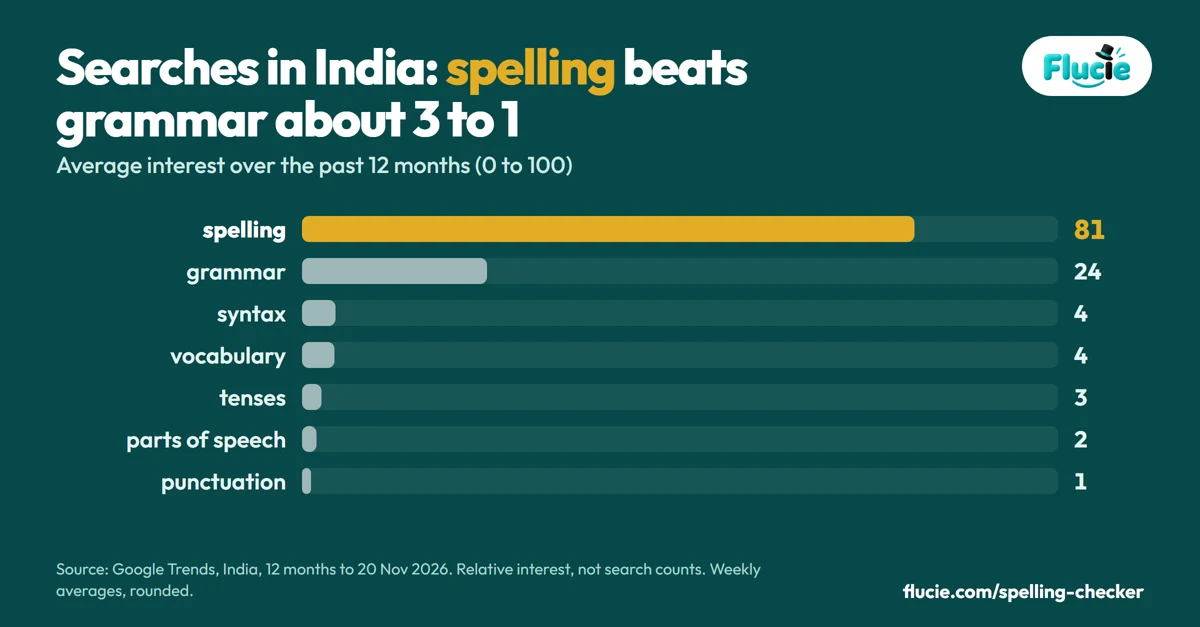
If you are wondering why spelling is such a common search, we looked at the data in why Indians search for spelling three times more than grammar.
Frequently asked questions
What are the most common spelling mistakes in English?
Words with double letters (necessary, accommodate, occurred), words that mix up I and E (receive, believe, friend, weird), words with letters that are easy to skip (February, library, government) and words that are really two words (a lot).
How do I stop spelling definitely wrong?
Remember that the word “finite” sits in the middle: de-finite-ly. The wrong spelling “definately” puts an a where the i belongs.
Is it receive or recieve?
Receive. The rule “I before E, except after C” applies: after the c comes e, then i.
Is it a lot or alot?
A lot, always two words. “Alot” is not a word, even though it is a very common mistake.
What is the best way to improve my spelling?
Practise the words you actually get wrong. Look, say, cover, write and check, on three different days, with five to ten words at a time.
Keep reading
 Spelling
Why Indians Search for “Spelling” Three Times More Than “Grammar”
A look at 12 months of Google Trends data for India, what the gap might mean, and five things that help with spelling.
 Vocabulary
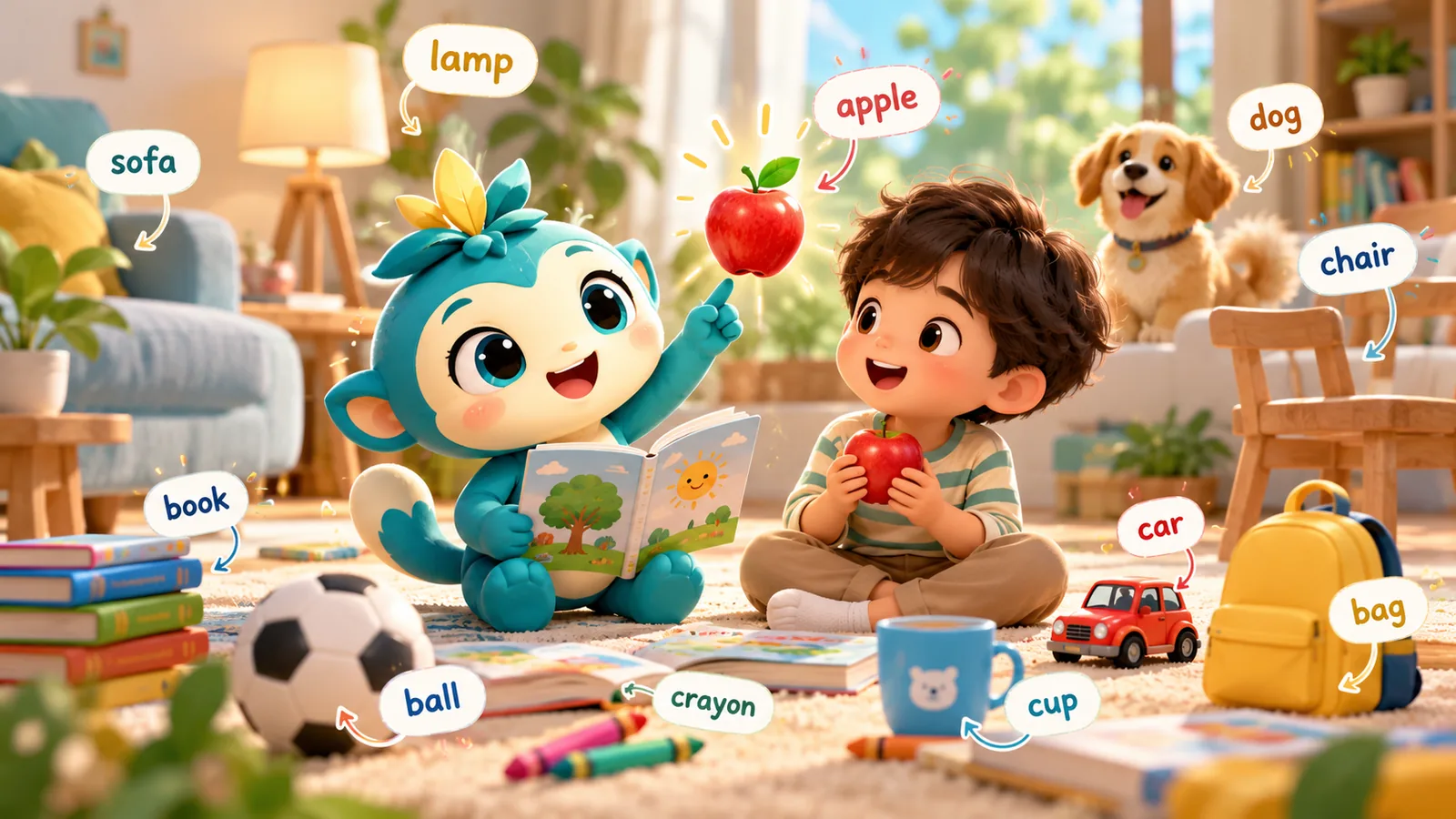
100 Easy English Vocabulary Words for Kids to Learn at Home
Simple everyday vocabulary children can see, hear, say and use, with a short example sentence for every word.
Easy English Sentences for Kids to Read
Thirty two short sentences in four reading levels, each with a question to ask, and a free printable reading sheet.
Written by the Flucie team. See how we make our content or send a correction to hello@flucie.com.
Find your own mistakes, free.
Paste your writing, see doubtful words underlined and fix each one in a tap. It runs in your browser.
Try the spelling checker